Pantry pest eradication requires surgical quarantine rather than broad chemical broadcast. Stored product pests exploit dark, unsealed shelving and food containers inside historic brick townhomes in The Fan and Church…
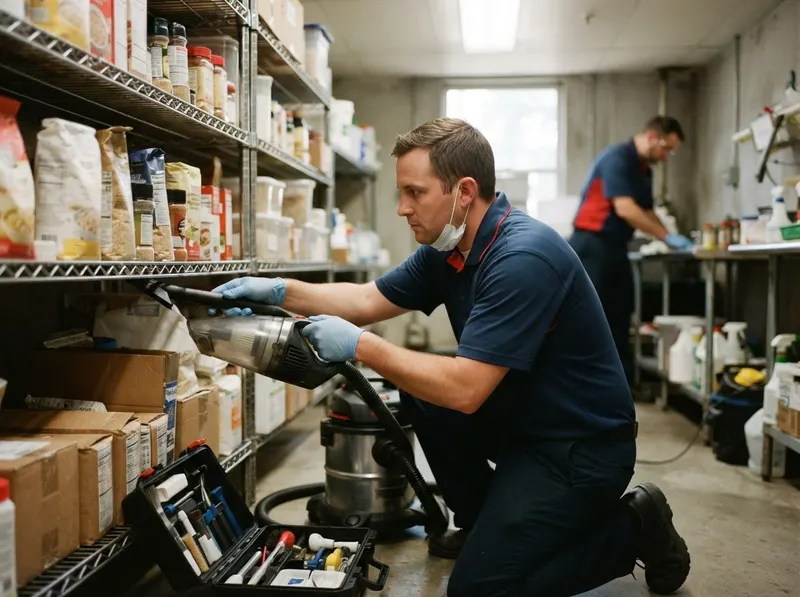
Pantry pest eradication requires surgical quarantine rather than broad chemical broadcast. Stored product pests exploit dark, unsealed shelving and food containers inside historic brick townhomes in The Fan and Church Hill, where high ambient humidity along the James River basin accelerates egg incubation cycles. A female Indian meal moth lays up to 400 eggs directly on packaging materials within a 14-day window. Retail insect sprays fail because they cannot penetrate the microscopic webbing, larval shelters, and structural gaps behind built-in cabinetry. Delvixa Pest Elimination executes a systematic physical cleanout, utilizing industrial HEPA vacuums to extract larvae and pupae from shelf pin-holes, baseboards, and cabinet under-mounts before administering targeted, food-safe insect growth regulators that disrupt pest maturation without leaving toxic surface residues.
Commercial food service operations in Carytown, Shockoe Slip, and Jackson Ward encounter stringent Virginia Department of Agriculture and Consumer Services (VDACS) sanitization standards. For these commercial environments, stored product pest decontamination involves deploying species-specific sex pheromone lures across precise 25-foot grid intervals to map the population epicenter. When food processing facilities or boutique bakeries discover beetle activity, the choice rests between spot-quarantine decontamination and structural isolation. Spot decontamination suits localized infestations confined to an isolated ingredient batch; widespread cabinet or warehouse migration requires systematic void flushing, disposal protocols, and perimeter sealing of masonry gaps. The trade-off centers on downtime versus containment: spot treatment limits operational disruption to 3 hours, whereas deep facility decontamination demands a temporary 12-to-24-hour stock stoppage to secure structural perimeters.
Residential homes throughout the Museum District, Ginter Park, Bellevue, and Forest Hill frequently feature historic heart-pine or lath-and-plaster kitchen infrastructure with wide subfloor voids. Stored product pests migrate into these architectural cavities to pupate away from light. Delvixa Pest Elimination seals these structural harborage avenues using elastomeric sealants and physical barrier trims. The protocol isolates the pantry perimeter from adjacent wall voids, halting re-infestation cycles permanently without requiring multi-year recurring service contracts. Vehicle deployments utilize low-profile equipment to maintain complete client privacy throughout neighborhood corridors.
Every job gets a firm, written price after a free on-site visit.
Tell us about your stored product pest decontamination job in Richmond and we'll send a clear, written quote, usually the same day.
 Delvixa Pest Elimination