Commercial food facilities operating within Richmond face structural vulnerabilities inherent to historical architecture and intense service volumes. Establishments along Cary Street in Carytown or within converted…
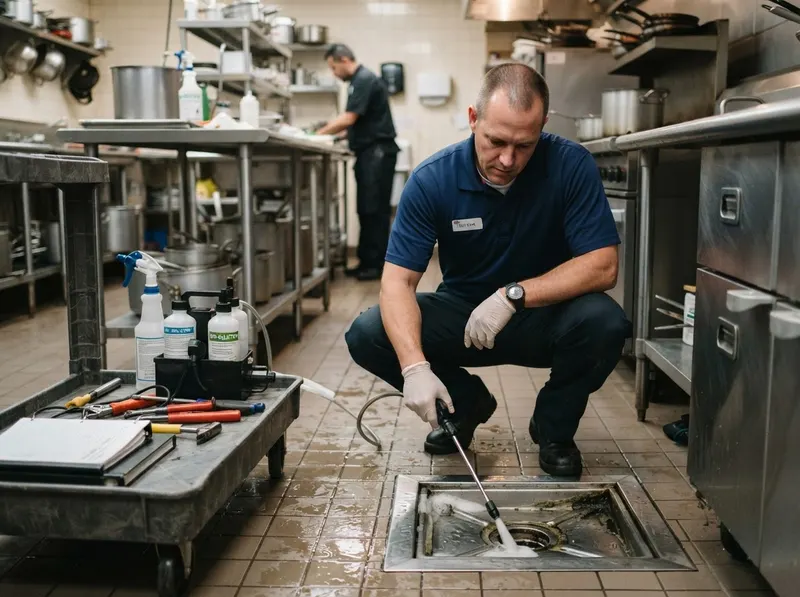
Commercial food facilities operating within Richmond face structural vulnerabilities inherent to historical architecture and intense service volumes. Establishments along Cary Street in Carytown or within converted brick spaces across Shockoe Slip often operate with aging cast-iron pipes, uneven subfloors, and settled quarry tile. In these settings, floor cleaning protocols using mop buckets wash liquefied fats, starches, and animal proteins into broken grout lines, floor-sink drains, and void spaces beneath stainless steel kickplates. Retail drain cleaners and hot water flushes move this grease matrix further down the lateral line without neutralizing the fermenting microbial biofilm that continuously draws phorid flies and German cockroaches into active preparation zones.
Bioremediation replaces reactive insecticides with live, beneficial bacillus bacterial strains suspended in dense clinging foam. Insecticides applied around food surfaces introduce chemical drift concerns and fail to penetrate wet organic layers where fly pupae mature. Biological remediation works differently: the specialized foam coats the entire 360-degree circumference of drain pipes, expanding into p-traps and floor troughs to digest the organic mass into water and carbon dioxide. A 2,000-square-foot kitchen in the Museum District with six floor sinks and an indoor grease interceptor requires complete biological evacuation of these organic harborage deposits to break continuous pest generation cycles at the biological root.
Operational selection depends on the severity of the structural accumulation. Routine preventative bioremediation suits dining rooms and kitchens balancing continuous turn rates near Jackson Ward, whereas facilities facing structural backing issues or failed health department inspections require intensive high-density foaming alongside mechanical physical crust disruption. Chemical caustic solutions degrade copper and cast iron, while enzymatic bioremediation preserves internal pipe integrity and grease trap capacity throughout historic commercial corridors in The Fan and Church Hill.
Every job gets a firm, written price after a free on-site visit.
Tell us about your commercial kitchen bioremediation job in Richmond and we'll send a clear, written quote, usually the same day.
 Delvixa Pest Elimination